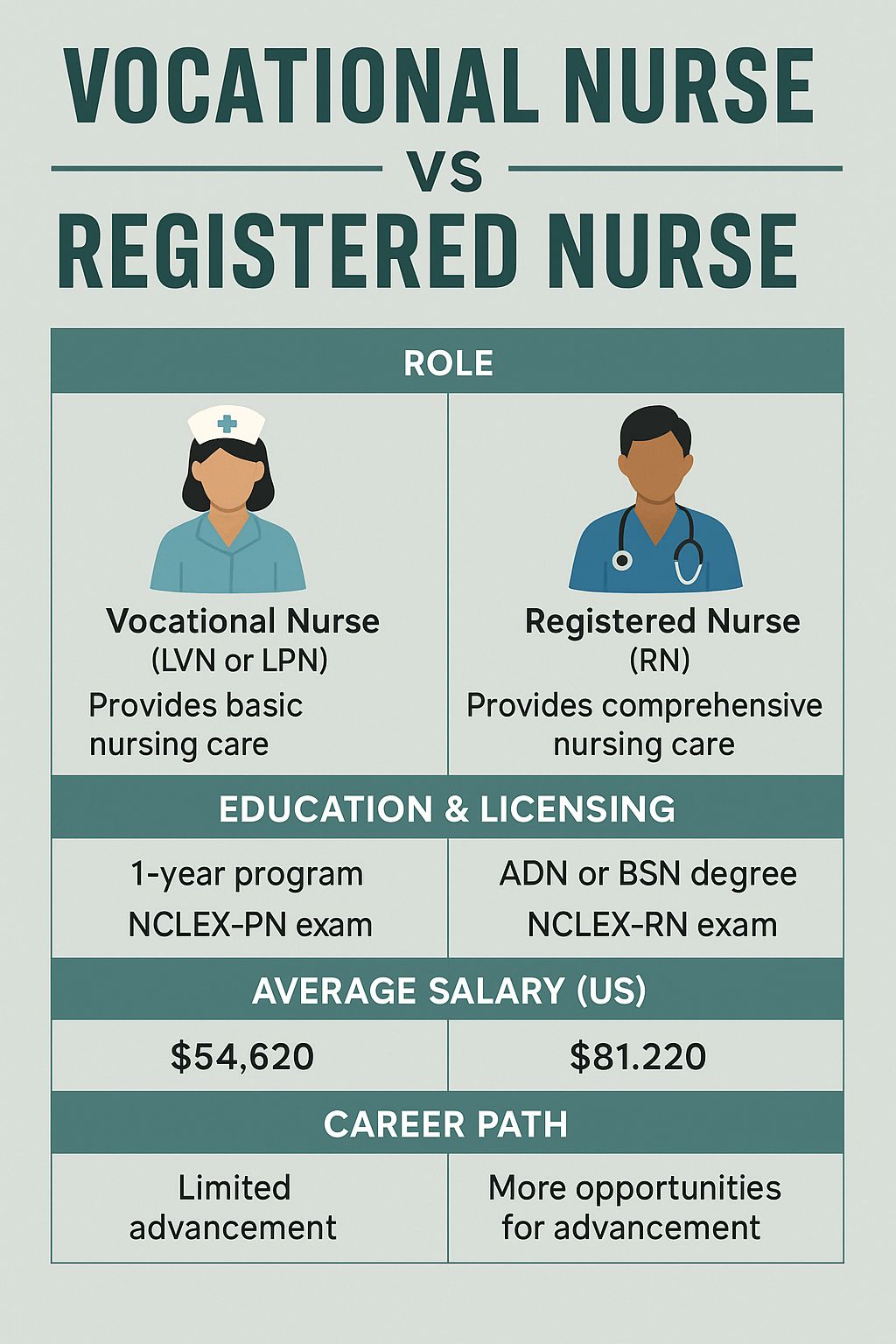
Nursing, a professional healthcare field practiced by a healthcare practitioner called a nurse, has become an important field to the healthcare sector since its establishment in 1854.
No country can underemphasize the role of nursing in the healthcare sector as the heartbeat of any healthcare institution second to the doctor.
Nurses are in charge of access and monitoring patients, maintaining patient records, assisting doctors during surgical procedures, administering medication and treatments, and a lot more of other duties and responsibilities performed by them.
Nursing professionals are often categorized by level, and based on the level of education, this can influence a particular nurse’s salary and even his career growth and advancement.
Two common nursing careers Vocational nurses and registered nurses offer unique responsibilities, opportunities, and careers, but amidst these lies the difference. We will compare and contrast these differences to help you make a better career choice and an informed choice.
How to Get a Student Loan as an International Student in USA (Guide to College Ave and Sallie Mae)
Top Paying Trades in US (2025): 13 Skilled Jobs That Make Great Money Without a Degree
Who is a vocational nurse and a registered nurse?
A vocational nurse
A licensed vocational nurse, or a vocational nurse, is a nurse who works in a home, facility, hospital, school, or medical care facility under the supervision of a registered nurse.
Vocational nurses share almost identical roles and functions with registered nurses, and this includes providing care for patients, monitoring patient vital signs, changing bandages, giving injections, preparing patients for treatment or surgery, and reporting issues to doctors or registered nurses in some cases.
To work as a vocational nurse, essential skills needed include excellent stamina, empathy for patients, the ability to work under pressure, good communication skills, medical knowledge and terminology, and the ability to pay attention to details.
Vocational nurses, like any other nurse, usually work long hours, extending to eight hours sometimes per shift, and they usually work during weekends and at night in some cases.
Emergency situations can make a vocational nurse stay on their feet for a long time.
A Registered Nurse
A registered nurse is a nurse that works with doctors and even other healthcare practitioners to give you the best medical care.
Unlike a vocational nurse, a registered nurse can perform physical examinations on your body and talk to you about the symptoms and the best treatment plans.
Registered nurses perform various roles and functions, and these include giving physical examinations, talking about medical history and symptoms, giving patients medication, using medical equipment, and supervising vocational nurses.
Registered nurses, just like vocational nurses, are required to have skills like excellent stamina, empathy for patients and sick ones, the ability to work under pressure, good communication skills, and also good leadership skills.
Registered nurses can work in various places like doctors’ offices, hospitals, outpatient clinics, schools, community health care, nursing and residential care facilities, and private homes or residences.
Education and Licensing Requirements of Registered Nurse and Vocational Nurse.
Registered Nurse Education Qualification and Requirement
To qualify for Registered Nurse, an individual can register for a diploma program to earn a nursing diploma, an associate degree in nursing, or a bachelor of science in nursing science, which is the most preferred by most healthcare establishments.
It should be noted that any of the certificates obtained from the academic program will gain you entry to sit for the NCLEX Registered Nurse examination.
For the registered nurse career path, it is advisable you take a bachelor of science in nursing degree, as they earn more than other certificates.
To become a registered nurse, it can take two to four years and might be less when you take a diploma or associate degree, which can only last 2 years or less.
Vocational Nurse Educational Requirements and Qualifications
To become a vocational nurse, the educational requirements include an individual completing a vocational nurse program in vocational schools, private colleges, and community colleges.
Just like the NCLEX Registered Nurse Examination, vocational nurses also get to take the National Council Licensure Examination Practical Nurse (NCLEX-PN).
Vocational nurse licenses require periodic renewal, and the vocational nurse program can take up to 2 years.
Study at Vamia Vocational School in Finland for free: Courses, Application Portal
Top Online Vocational Schools in US
12 Best Highest paying tech trades jobs 2025
Salary Comparison for Vocational Nurse and Registered Nurse
Based on a report from Glassdoor, the median total salary for a vocational nurse is $73,000, while the US Bureau report states $63,340 as the average salary for a vocational nurse, which can grow up to $80,000 based on experience and years of working.
Registered nurses earn an average median salary of $93,600 based on Glassdoor and can increase to $99,000 as the nurse progresses in level and also based on the years of experience.
The salary mentioned for vocational and registered nurses also includes base salary, additional pay, profit sharing, commission, bonuses, or other compensation.
Registered nurses earn more than vocational nurses, not only in the United States but also in other geographical locations.
Career Growth and Specialization for Vocational and Registered Nurses
A vocational nurse is not like a registered nurse in career growth; to climb a ladder of career success, a vocational nurse should enroll in a program that will enable him or her to become a registered nurse.
A registered nurse, on the other hand, can specialize to become a pediatric nurse, critical care nurse, or nurse practitioner with a master’s or doctorate degree.
Pros and Cons of Vocational and Registered Nurses
Vocational nurses can be very fast based on the year of training, with the longest duration taking at most 2 years and it can be less, but on the other hand, vocational nurses can earn a lesser salary than registered nurses and have limited career growth.
Registered nurses offer a better salary than vocational nurses and also enjoy faster and better career success but can be laden with more responsibilities, which can lead to more stress.
Which One Should You Choose: Registered Nurse or Vocational Nurse?
Choosing between a vocational nurse and a registered nurse should be based on the following factors:
1. Time
Time should be considered when you want to choose between going for a vocational nurse or a registered nurse. If you feel time is not on your side, you can take the vocational nurse, which is faster and can be completed within a little duration of time.
2.Cost
Registered nurses cost more than vocational nurses; if an individual is short of finances, he or she should consider taking the vocational nurse program and then save later for the registered nurse program.
3. Career Goals
It is not debated; a registered nurse will offer you a better and faster career success than being a vocational nurse based on the current labor market demand.
A registered nurse should be considered more than a vocational nurse if you have career goals in sight.
Conclusion
The comparison between vocational and registered nurses is compiled to make a better career decision, but this should not merely alter your personal preference or personal goal.
Both registered and vocational nurses can offer you the peak of your nursing career without shifting the bridge from one side to another.